Declaration

Recognition

About Conflict

CONFLICT SETTLEMENT PROCESS


Since February 1992 the process of mediation efforts on the settlement of Armenian-Azerbaijani conflict within the Conference for Security and Cooperation in Europe (hereinafter - CSCE)  has started. At the Additional Meeting of the CSCE Council of Ministers, held in Helsinki on 24 March 1992, a decision to convene as soon as possible a conference on Nagorno-Karabakh in Minsk under the auspices of the CSCE to provide an ongoing forum for negotiations towards a peaceful settlement of the crisis on the basis of the principles, commitments and provisions of the CSCE was adopted.

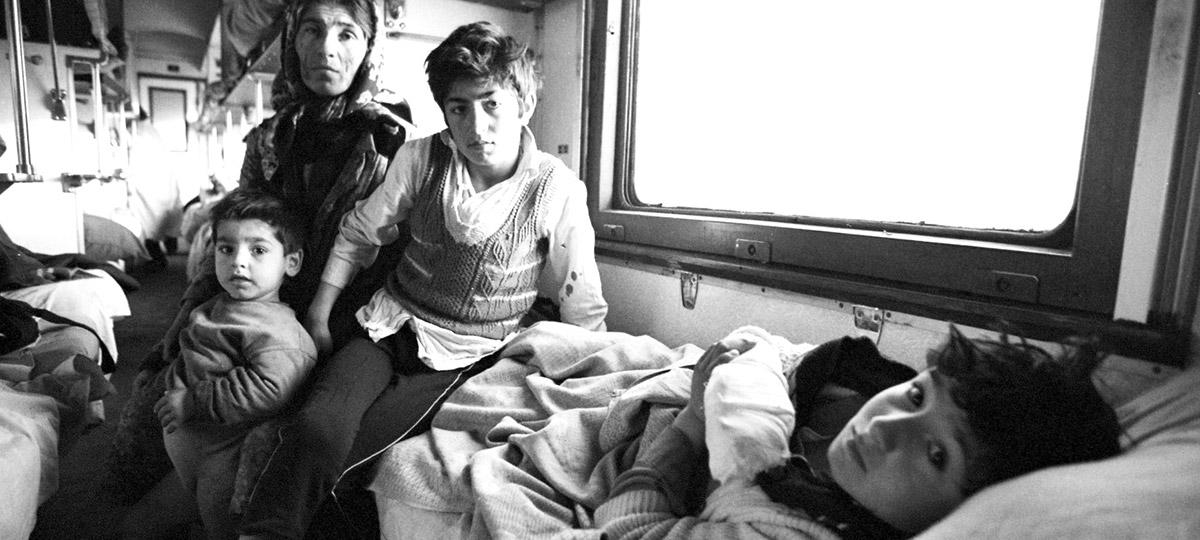
In general, the legal and political constituent for the settlement of the conflict is based on the norms and principles of international law, laid down in the UN Security Council resolutions 822, 853, 874 and 884 as well as in the appropriate documents and decisions of the Organization for Security and Cooperation in Europe (hereinafter - OSCE) and other international organizations. As mentioned above, the UN Security Council resolutions were adopted in 1993 in response to the occupation of the territories of Azerbaijan and reaffirmed respect for the sovereignty, territorial integrity and inviolability of the international borders of the Republic of Azerbaijan and all other States in the region. The Council demanded immediate cessation of all hostile acts, immediate, complete and unconditional withdrawal of occupying forces from all occupied regions of the Republic of Azerbaijan, and called for the restoration of economic, transport and energy links in the region, ensuring the return of refugees and displaced persons to their homes. The UN Security Council approved also the efforts of the OSCE Minsk Group on the achievement of the peaceful solution to the conflict and called for the search of ways of the conflict settlement within the OSCE Minsk process. None of these resolutions was implemented by Armenia.

On 12 May 1994, the ceasefire was established. According to the decision taken at the CSCE Budapest Summit (5-6 December 1994), Heads of States and Governments of the CSCE participating States set up the institute of the Co-Chairmanship of the Minsk Conference for the coordination of all mediation efforts within the CSCE framework. The Budapest Summit tasked the CSCE Chairman-in-Office to conduct negotiations aimed at the conclusion of the political agreement on the cessation of the armed conflict, implementation of which will remove the consequences of the conflict and will allow convening the Minsk Conference. The Summit also adopted a decision on the deployment of the CSCE multinational peacekeeping forces after the achievement of the agreement between the Parties on the cessation of the armed conflict, and the establishment of the High Level Planning Group (HLPG) located in Vienna and aimed at the preparation of the peacekeeping operation. It superseded an earlier Initial Operation Planning Group (IOPG), which was established in May 1993.

The OSCE Chairman-in-Office issued on 23 March 1995 the mandate for the Co-Chairmen of the Minsk Process (DOC. 525/95).

At the OSCE Lisbon Summit, which was held on 2-3 December 1996, the Co-Chairmen of the OSCE Minsk Group and the OSCE Chairman-in-Office recommended the principles, which should have been the basis for the settlement of the Nagorno-Karabakh conflict. But Armenia did not accept these principles and therefore it was the only one out of 54 OSCE participating States not to support them.

Then the OSCE Chairman-in-Office made a statement with the inclusion of those principles. They are as follows:

- territorial integrity of the Republic of Armenia and the Azerbaijan Republic;

- legal status of Nagorno-Karabakh defined in an agreement based on self-determination which   confers on Nagorno-Karabakh the highest degree of self-rule within Azerbaijan;

- guaranteed security for Nagorno-Karabakh and its whole population, including mutual obligations to ensure compliance by all the Parties with the provisions of the settlement.

After the Lisbon Summit the institute of the triple Co-Chairmanship, including Russia, France and the USA, was established in 1997 (since 1992 the Chairmen of the Minsk Conference were Italy in 1992-1993, Sweden in 1994, Russia and Finland in 1995-1996). Since April 1997 the negotiations were suspended and substituted by the visits of the Co-Chairmen to the region. On 1 June 1997, the Co-Chairmen presented the draft of a comprehensive agreement on the settlement of the Nagorno-Karabakh conflict, which consisted of the Agreement on the cessation of the armed conflict and the Agreement on the status of Nagorno-Karabakh. Despite the readiness of Azerbaijan to start constructive consultations on the essence of the mentioned documents, Armenia categorically rejected the proposed approach.

On 19-23 September 1997, the Co-Chairmen, during their visit to the region, presented new proposals based on the “stage-by-stage” approach to the settlement, according to which it was planned at the first stage to liberate 6 occupied districts, to deploy the OSCE peacekeeping operation, to return the displaced persons to the liberated territories and to restore main communications in the conflict zone. At the second stage the problems of Lachyn and Shusha were to be solved and the main principles of the status of Nagorno-Karabakh were to be adopted. As a result, the OSCE Minsk Conference ought to be convened. On 10 October 1997, the Presidents of Azerbaijan and Armenia in their joint Statement in Strasbourg stated that “the recent proposals of the Co-Chairmen were a hopeful basis for the resumption of negotiations within the framework of the Minsk Group”.

But after the resignation in February 1998 of Levon Ter-Petrossian, the President of Armenia, and with coming to power in March 1998 of Robert Kocharian, the next visit of the Co-Chairmen to the region took place, when Armenia officially withdrew the consent to the proposals on the “stage-by-stage” settlement of the conflict.

On 9 November 1998, the Co-Chairmen put forward the proposals based on the concept of a “common State”. According to this concept, Nagorno-Karabakh would have the status of a State and a territorial unit in the form of a republic, which, together with Azerbaijan would constitute the common State within the internationally recognized borders of Azerbaijan. Azerbaijan rejected those proposals since they violated its sovereignty and contradicted the Lisbon principles. Since then no new proposals have been made and the Minsk process practically has reached a deadlock.

In order to give an additional impetus to the negotiations, since April 1999 direct talks between Presidents of Azerbaijan and Armenia on the achievement of conflict settlement began.

During their visit to the region in March 2002 the OSCE Minsk Group Co-Chairmen proposed to conduct negotiations at the level of special representatives of the Presidents of Azerbaijan and Armenia. The proposal was accepted by the heads of both States. On March 13-15 and July 29-30 2002, the two meetings of the special representatives of the Presidents of Armenia and Azerbaijan took place near Prague.

Since 2004 the direct talks between the Foreign Ministers of Armenia and Azerbaijan have started within the so-called “Prague Process”.

Nevertheless, despite positive signs in the drive to find a settlement to the conflict, the parties could not achieve a substantial breakthrough. The OSCE Minsk Group Co-Chairmen reported on 22 June 2006 to the OSCE Permanent Council that during the past seven months they intensified mediation efforts and worked hard to achieve the agreement of both sides on basic principles for a settlement. For that purpose they visited Baku and Yerevan three times together and several more times separately, organized two meetings of the Ministers of Foreign Affairs of Armenia and Azerbaijan and two summits between the Presidents of both States - first in Rambouillet in February and then in Bucharest in early June. For the first time since 1997, when the current format of the Co-Chairmanship of the Minsk Group was established, a joint Mission of Representatives of the Co-Chair countries at the Deputy Foreign Minister level traveled to the region in May in order to make clear to the Presidents of both countries that 2006 is the necessary window of opportunity for reaching an agreement on Nagorno-Karabakh.

According to the Co-Chairmen, a set of core principles had been proposed to Presidents Aliyev and Kocharian. They clarified that their approach was not aimed at solving all aspects of the conflict in one phase. Instead, in words of the Co-Chairmen, their principles sought to achieve a major degree of progress but deferred some very difficult issues to the future and envisioned further negotiations.

Nevertheless, the Co-Chairmen stated that since the two Presidents failed to agree they had reached the limits of their creativity in the identification, formulation, and finalization of these principles. They made clear that if the two sides are unable to agree on those principles, which have been put forward, it is now contingent upon the parties themselves to work together to reach an alternative agreement that both find acceptable. The Co-Chairmen pointed out that they see no point right now in continuing the intensive shuttle diplomacy and in initiating further presidential meetings.

In response to the statement of the Minsk Group Co-Chairmen and comments made on that by the Armenian side, which has traditionally attempted to distort the reality of the process of negotiations, the Ministry of Foreign Affairs of the Republic of Azerbaijan clarified, inter alia, that definition of the legal status of the Nagorno-Karabakh region of the Republic of Azerbaijan is impossible under the conditions of continuing occupation and ethnic cleansing and, accordingly, envisages liberation of the occupied territories of Azerbaijan, demilitarization of the whole conflict zone, provision of appropriate international security guarantees therein and return of the forcibly displaced population of Azerbaijan to their homes.

The Azerbaijan side once again reaffirmed its readiness to grant Nagorno-Karabakh highest status of self-rule within the internationally-recognized territorial integrity of the Republic of Azerbaijan and based on its Constitution.

The Ministry also pointed out that with the aim of establishing inter-communal peace and harmony, as well as creating objective conditions for defining the region’s status, and also taking into consideration the perspective of the region’s further development, Azerbaijan would be prepared to review, in conformity with the precedents existing in the international practice, implementation of a complex of economic and other incentives for the population of Nagorno-Karabakh after the restoration of its ethnic composition as of the pre-conflict period.

Along with that, the Ministry reaffirmed Azerbaijan’s adherence to continuing talks to achieve lasting and fair peace in the region.

On 13 July 2007, the Co-Chairmen of the OSCE Minsk Group issued a statement in which they provided assessment of the emerging situation in the settlement process for the conflict in light of the meeting between the President of the Republic of Azerbaijan Ilham Aliyev and the President of the Republic of Armenia Robert Kocharian in St. Petersburg on 9 June 2007. The Co-Chairmen stated that during the meeting the Presidents concentrated their discussion on a limited number of obstacles that stand in the way of agreement on a set of “basic principles” for the peaceful settlement of the conflict. The Co-Chairmen further stated that the Presidents could not overcome these remaining differences. The Co-Chairmen in their statement took note of the initiative to organize a joint visit to the Nagorno-Karabakh region, Yerevan and Baku of a group of intellectuals from Azerbaijan and Armenia. The Co-Chairmen welcomed and highly appreciated that event, which they consider as a first concrete confidence-building measure.

In its statement following the adoption by the UN General Assembly on 14 March 2008 of resolution A/RES/62/244, the Ministry of Foreign Affairs of the Republic of Azerbaijan made it clear that the draft paper on “basic principles” for the peaceful settlement of the conflict, prepared by the Co-Chairmen of the OSCE Minsk Group, contained more disagreements and unsettled issues rather than clarity.

The conflict settlement issue is being routinely addressed at all OSCE Summits and Ministerial Council’s meetings, which stress generally the importance of the peace dialogue and efforts to achieve an early settlement of the conflict based on the norms and principles of international law.

The issue of conflict remains also on the Council of Europe agenda. Thus, consideration of the matter in question during the January 2005 session of the Council of Europe Parliamentary Assembly resulted in adoption on 25 December 2005 of the resolution 1416 entitled “The conflict over the Nagorno-Karabakh region dealt with by the OSCE Minsk Conference”. The Parliamentary Assembly reaffirmed the occupation of a considerable part of the territory of Azerbaijan and expressed its concern that the military action, and the widespread ethnic hostilities which preceded it, led to large-scale ethnic expulsion and the creation of mono-ethnic areas which resemble the terrible concept of ethnic cleansing. The Assembly made it clear that the occupation of foreign territory by a member State constitutes a grave violation of that State’s obligations as a member of the Council of Europe and reaffirmed the right of displaced persons from the area of conflict to return to their homes safely and with dignity. The Assembly also recalled the relevant resolutions of the UN Security Council and urged the parties concerned to comply with them, in particular by withdrawing military forces from any occupied territories.